
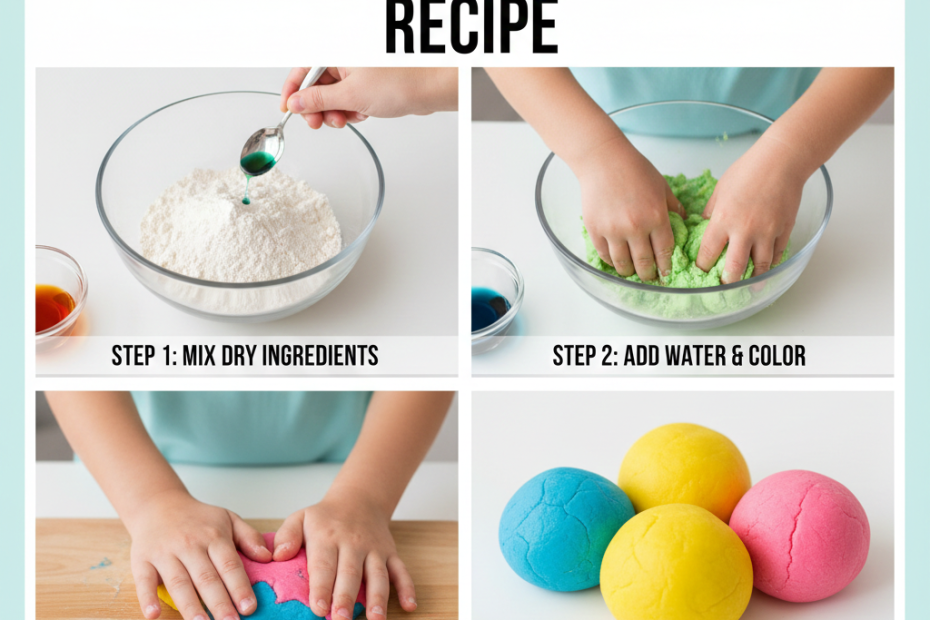
There’s something special about playdough. The squishy texture, the endless possibilities for creation, the way it keeps little hands busy for hours. But store-bought playdough comes with downsides—it’s expensive, dries out quickly, and you’re never quite sure what’s in it, especially when you have a toddler who might taste everything.
The good news? You can make your own playdough at home in just five minutes without even turning on the stove. This no-cook recipe creates silky-soft playdough that’s safe for little ones, costs pennies to make, and lasts for months when stored properly.
No cooking means no waiting for it to cool down. No hot pots to worry about with curious kids nearby. Just mix, knead, and play. It’s so simple that older kids can help make it, which adds another layer of fun to the whole experience.
Let’s explore how to make this easy homemade playdough, why it works, and all the ways you can customize it to delight your children.
Why Make Your Own Playdough?
Before we dive into the recipe, you might wonder if it’s really worth making your own when you can buy it at the store. Here’s why homemade is better:
You know exactly what’s in it. Every ingredient is something you’d find in your kitchen. If your toddler takes a taste (and they probably will), you won’t panic. It’s salty and unpleasant, so they won’t eat much, but it’s completely non-toxic.
It costs almost nothing. A batch of homemade playdough costs less than a dollar to make. A comparable amount from the store costs five to ten times that much. You can make multiple colors for less than buying one store container.
The texture is amazing. Homemade playdough is softer, smoother, and more pliable than most store brands. It doesn’t crumble or get hard and crusty as quickly.
It lasts longer. When stored properly in an airtight container, this playdough stays fresh for three to six months. Store-bought containers often dry out once opened.
You can customize everything. Want purple playdough that smells like lavender? Galaxy playdough with glitter? Pumpkin spice scented orange playdough for fall? You can create any color, scent, or texture combination imaginable.
Kids love making it. The process of creating playdough is almost as fun as playing with it. Children feel proud using something they helped make.
No chemicals or preservatives. You control what goes in. No artificial colors or fragrances unless you choose to add them.
The Basic No-Cook Playdough Recipe
This is the foundational recipe. Once you master this, we’ll explore all the fun variations.
Ingredients You’ll Need:
- 2 cups all-purpose flour
- 1 cup salt (regular table salt, not coarse)
- 2 tablespoons cream of tartar (this is the secret ingredient)
- 2 tablespoons cooking oil (vegetable, canola, or coconut oil all work)
- 1.5 cups boiling water (just boiled, very hot)
- Food coloring (optional but fun)
- Few drops of essential oil for scent (optional)
Equipment:
- Large mixing bowl
- Measuring cups and spoons
- Wooden spoon or sturdy spatula
- Kettle or pot to boil water
- Airtight container for storage
Step-by-Step Instructions:
Step 1: Mix the dry ingredients
In your large bowl, combine the flour, salt, and cream of tartar. Stir them together with a spoon until well mixed. This takes just 30 seconds. Make sure there are no lumps and everything is evenly distributed.
The cream of tartar is what makes this recipe special. It acts as a preservative and gives the playdough that silky, stretchy texture. Don’t skip it.
Step 2: Add the oil
Pour the oil into the dry mixture. Stir it in. The mixture will look crumbly and sandy at this point. That’s exactly right.
Step 3: Boil the water
While you’re mixing, boil water in a kettle or pot. You need it very hot—actually boiling. This is the only “cooking” part of the recipe, but you’re not cooking the dough itself.
If you’re adding food coloring, this is when to do it. Add several drops of food coloring to the boiling water and stir. Start with 5-10 drops for pastel colors, more for vibrant colors. The color will be lighter in the dough than in the water.
Step 4: Add the hot water
Carefully pour the hot water into the flour mixture. Pour slowly while stirring. The mixture will look soupy and wet at first. Keep stirring.
Be careful here—the water is very hot. Keep children back from the bowl during this step.
Step 5: Stir until it comes together
Keep stirring as the mixture transforms. It will go from soupy to sticky to a shaggy dough. This takes 1-2 minutes of stirring. As it cools slightly, it will become more solid.
Step 6: Knead it
Once the dough is cool enough to touch (wait a minute or two), dump it onto a clean counter or cutting board. Knead it with your hands for 2-3 minutes. At first it might feel sticky. Keep kneading. It will transform into smooth, soft, perfect playdough.
If it’s still a bit sticky after kneading, add a tiny sprinkle of flour and knead more. If it’s too dry or crumbly, add a few drops of water and knead.
Step 7: Play or store
Your playdough is ready to use immediately. Let children start playing right away, or store it in an airtight container for later.
That’s it. Five minutes of work for months of playtime.
Why This Recipe Works (The Science)
Understanding why this recipe works helps you troubleshoot if something goes wrong.
Flour provides the structure and body. It’s the main ingredient that makes dough feel like dough.
Salt acts as a preservative, preventing mold and bacteria growth. This is why the playdough lasts so long. The salt also makes it taste terrible, which discourages children from eating it.
Cream of tartar is the magic ingredient. It’s an acid that reacts with the salt and flour to create elasticity. It makes the dough stretchy instead of crumbly. It also helps preserve the dough and keeps the colors bright over time.
Oil provides smoothness and prevents sticking. It makes the dough silky and keeps it from drying out. It also makes cleanup easier—playdough won’t stick to surfaces as much.
Boiling water activates the ingredients differently than room temperature water would. The heat helps bind everything together quickly without actual cooking. It also helps distribute the food coloring evenly.
Customizing Your Playdough: Colors, Scents, and Textures
The basic recipe is wonderful, but customization is where things get really fun.
Creating Different Colors:
Single color: Add food coloring to the boiling water before mixing. Liquid or gel food coloring both work. Gel colors tend to be more vibrant.
Multiple colors: Make white/plain dough, then divide it into portions. Flatten each portion, add drops of different food coloring to the center, fold it over, and knead until the color distributes evenly. Wear gloves to keep your hands from staining.
Natural colors: If you prefer to avoid artificial food coloring, try natural alternatives:
- Pink/red: Beet juice
- Yellow: Turmeric powder
- Green: Spinach powder or matcha
- Orange: Carrot juice or paprika
- Purple: Purple cabbage juice
- Brown: Cocoa powder
Natural colors are more muted than artificial ones, giving softer, earthier tones.
Marbled playdough: Don’t fully knead in the color. Stop kneading while there are still swirls. You’ll have beautiful marbled playdough with streaks of color.
Galaxy or unicorn dough: Mix several colors of playdough loosely together without fully blending. Add glitter. The result looks magical with swirls of color and sparkle.
Adding Scents:
Scented playdough adds another sensory dimension. Add scents during the mixing process.
Essential oils: Add 5-10 drops when you add the cooking oil. Lavender, peppermint, lemon, orange, and eucalyptus all work beautifully. Use less for strong scents like peppermint.
Extracts: Vanilla, almond, or peppermint extract from your baking cupboard work perfectly. Add 1-2 teaspoons.
Spices: Mix in spices with the dry ingredients for seasonal fun:
- Cinnamon for fall playdough
- Pumpkin pie spice for autumn
- Cocoa powder for chocolate scent (also colors it brown)
- Instant coffee for coffee shop playdough
Kool-Aid or drink mix: Replace some of the flour with unsweetened drink mix powder. This adds both color and scent. Strawberry, lemon, orange, and grape all work well.
Adding Textures:
Glitter playdough: Mix in fine glitter during the final kneading. Start with 1-2 tablespoons. Kids love sparkly dough, and it catches the light beautifully.
Sand playdough: Add 1/4 cup of fine sand for a grittier texture. This creates interesting sensory input.
Oatmeal dough: Add 1/4 cup of finely ground oats for texture. This works especially well for nature-themed play.
Confetti dough: Mix in colorful sprinkles or tiny craft confetti pieces for visual interest.
Troubleshooting Common Problems
Sometimes playdough doesn’t turn out perfectly. Here’s how to fix common issues:
Problem: The dough is too sticky
Solution: This usually means too much water or not enough kneading. Knead it longer—the stickiness often disappears with more kneading. If it’s still sticky after 3-4 minutes of kneading, sprinkle on a little flour (a tablespoon at a time) and knead it in.
Problem: The dough is too dry or crumbly
Solution: Not enough water or too much flour. Add water a few drops at a time and knead thoroughly between additions. A teaspoon of oil can also help.
Problem: The color is too light or uneven
Solution: Add more food coloring and knead longer. The color looks darker in the water than it will in the dough, so use more than you think you need. For even distribution, make sure to knead for several minutes.
Problem: The dough feels grainy
Solution: This happens if the salt doesn’t dissolve fully. Use finer salt (table salt, not coarse sea salt) and make sure your water is actually boiling when you add it. Kneading longer can also help.
Problem: The dough is too soft and won’t hold shapes
Solution: Add more flour, a tablespoon at a time, kneading between additions. This can happen in humid climates.
Problem: The playdough dried out in storage
Solution: Add a few drops of water and knead it in. You can usually revive dried playdough. Store it in a truly airtight container next time—ziplock bags don’t seal well enough.
Storage Tips for Long-Lasting Playdough
Proper storage makes all the difference in how long your playdough stays fresh and usable.
Use airtight containers: Glass jars with rubber seals, plastic containers with snap-on lids, or even ziplock bags inside another container all work. The key is keeping air out.
Store in a cool place: A cupboard or closet works better than a sunny windowsill. Heat and light can dry out playdough faster.
Separate colors: Store different colors in separate containers so they don’t bleed together and turn brown.
Add a damp paper towel: If you live in a very dry climate, include a slightly damp (not wet) paper towel in the container. This adds a tiny bit of moisture to the environment.
Check periodically: Open the container every few weeks to check on the playdough. If it’s starting to feel dry, knead in a few drops of water.
Watch for mold: The salt prevents this, but if playdough gets stored when wet or in a very humid environment, check for any unusual smells or spots. If you see mold, throw it out and make fresh.
Refresh as needed: Even properly stored playdough will eventually dry out. When it does, you can add water and re-knead it, or simply make a fresh batch. It’s so quick and cheap that making new batches isn’t a burden.
With proper storage, homemade playdough lasts 3-6 months easily. Many people report using the same batch for close to a year.
Fun Playdough Activities and Add-Ons
Playdough on its own is wonderful, but adding simple tools and prompts can extend play and learning.
Simple Tools to Offer:
Rolling pins: Child-sized or regular rolling pins let kids flatten and roll the dough.
Cookie cutters: Every shape imaginable—animals, letters, numbers, seasonal shapes. These are perfect for shape recognition.
Plastic knives: Butter knives or plastic picnic knives let kids practice cutting safely.
Stamps: Alphabet stamps, number stamps, or picture stamps press designs into the dough.
Texture tools: Forks, combs, mesh strainers, lace, or textured fabric pressed into dough create interesting patterns.
Play dishes and utensils: Toy pots, pans, plates, and utensils turn playdough into pretend food.
Beads and buttons: Press these into the dough for decoration. Great for fine motor practice (with supervision for young children).
Pipe cleaners: Insert these to create hair, antennae, or stems for flowers.
Googly eyes: Press into playdough creatures to bring them to life.
Natural items: Sticks, leaves, acorns, and stones from nature walks make wonderful additions.
Activity Ideas:
Playdough bakery: Children create cookies, cakes, pies, and pastries using cookie cutters, rolling pins, and play dishes.
Monster making: Use googly eyes, pipe cleaners, and beads to create silly monsters or creatures.
Letter learning: Roll dough into “snakes” and form letters. Or use letter cookie cutters and have children identify each letter.
Number practice: Make the right number of playdough balls for each number. Five balls for “5,” three for “3.”
Birthday cakes: Roll out cake layers, stack them, and decorate with beads as “candles.” Perfect for pretend birthday parties.
Nature press: Take playdough and nature items outside. Press leaves, flowers, and bark into the dough to make impressions.
Cutting practice: Roll playdough into snakes and let children practice cutting with safe scissors. This builds hand strength.
Hide and seek: Press small toys or beads into playdough balls. Children squish the dough to find the hidden treasures.
Age-Appropriate Playdough Play
Different ages interact with playdough differently. Here’s what to expect and encourage:
Toddlers (18 months – 3 years):
At this age, playdough is mostly about sensory exploration. They poke it, squish it, tear it, and definitely taste it (which is why this safe recipe is perfect).
Offer simple tools like a rolling pin or large cookie cutters. Don’t expect elaborate creations. The process of touching and manipulating is the goal, not the end product.
Supervise closely and keep portions small. Toddlers may try to eat it, put it in their nose, or throw it. This is normal exploration.
Preschoolers (3-5 years):
This age starts creating recognizable things—snakes, balls, simple animals, or food items. They enjoy using more tools and love pretend play scenarios.
Offer a variety of tools and let them experiment. They can cut, stamp, roll, and create with increasing skill. Their fine motor control is developing rapidly.
They might mix all the colors together into a brown blob. That’s okay. It’s part of learning about color mixing.
Kindergarten and Up (5+ years):
Older children create detailed scenes, figures, and structures. They plan what they’ll make and work on projects over time.
They can follow playdough “recipes” (like making specific animals or objects from instructions). They enjoy challenges like making the entire alphabet or creating a zoo of animals.
They can help make the playdough itself, measuring ingredients and mixing.
Safety Considerations
This recipe is designed to be safe, but keep these points in mind:
It’s not food: While non-toxic, playdough isn’t meant to be eaten. It’s very salty and tastes bad, which usually prevents children from eating much. If your child eats a small amount, they’ll be fine but might be thirsty from all the salt.
Choking hazards: Small playdough tools, beads, or buttons can be choking hazards for children under three. Supervise closely and use only large items with young toddlers.
Allergies: If your child has a wheat or gluten allergy, regular playdough isn’t suitable. You can make gluten-free versions using rice flour or cornstarch instead of wheat flour, though the texture will be slightly different.
Food coloring on skin: Food coloring can temporarily stain hands and faces. It washes off with soap and water but might last a day or two on skin. Clothes can also stain, so use old play clothes or smocks.
Supervision for young children: Always supervise toddlers and young preschoolers with playdough. They may try to put tools in their mouth or nose, or eat the dough.
Storage away from pets: While non-toxic for humans, the high salt content can be dangerous if pets eat large amounts. Store playdough where curious dogs or cats can’t reach it.
Cost Comparison: Homemade vs. Store-Bought
Let’s break down the actual cost to see the savings:
Homemade playdough (one batch):
- 2 cups flour: $0.30
- 1 cup salt: $0.15
- 2 tablespoons cream of tartar: $0.50
- 2 tablespoons oil: $0.05
- Food coloring: $0.10
- Total: About $1.10 per batch
This batch makes approximately the same amount as 3-4 store-bought containers.
Store-bought playdough:
- Single container: $3-5
- 3-4 containers: $12-20
Savings: Making your own saves $10-19 per batch, or about 80-90% of the cost.
If you have multiple children or go through playdough quickly, these savings add up fast. Making playdough once a month for a year saves you well over $100.
Frequently Asked Questions
Can I make this without cream of tartar?
You can, but the results won’t be as good. The playdough will be more crumbly and won’t last as long. Cream of tartar is the ingredient that creates that silky, stretchy texture. It’s worth buying a container—it lasts forever and works in this recipe repeatedly.
What if I don’t have cream of tartar and need playdough right now?
Try this emergency no-cook recipe: 2 cups flour, 1 cup salt, water added gradually until it reaches dough consistency, and 1 tablespoon oil. It works in a pinch but won’t be as soft or long-lasting.
Can I use this recipe with children who have celiac disease?
Not as written, since it contains wheat flour. But you can substitute gluten-free flour or rice flour. The texture will be slightly different, but it works.
My child ate some playdough. Should I be worried?
Small amounts are completely safe. The salt content makes it taste terrible, so they probably won’t eat much. It might make them thirsty. If they ate a large amount, call your pediatrician, but homemade playdough is non-toxic.
How can I make the playdough softer?
Add a little more oil or a few drops of water and knead well. Playdough can dry out slightly over time, and refreshing it with oil or water brings back the softness.
Can I bake playdough creations to harden them?
This particular recipe isn’t designed for baking. If you want to create permanent items, look for salt dough recipes specifically meant for baking.
Why did my playdough turn brown when I mixed the colors?
When you mix all colors together, especially red, blue, and yellow, they create brown or muddy colors. This is normal color theory. Store colors separately or embrace the brown as a learning opportunity about color mixing.
Final Thoughts
Making homemade no-cook playdough is one of those simple pleasures of parenting. It takes just five minutes and creates something your children will use for hours, weeks, or even months. The soft texture, the endless colors, the safe ingredients—it’s simply better than what you can buy.
But beyond the practical benefits, there’s something special about making things with your own hands. When you create playdough together with your children, you’re teaching them that they don’t need to buy everything ready-made. They can create, experiment, and make things themselves.
You’re also giving them a multi-sensory experience that supports development in countless ways. Those little hands squishing, rolling, and molding playdough are building muscles needed for writing. That brain deciding what to create and how to make it is developing problem-solving and planning skills. That imagination turning a blob of dough into a snake, a cake, or a monster is the same creativity they’ll use throughout their lives.
And the best part? You don’t need any special skills, equipment, or ingredients. Just mix, knead, and watch the magic happen in your kitchen. The joy on your child’s face when they help make their own playdough and then spend the afternoon creating with it is worth far more than the dollar you spent on ingredients.
So grab that flour and salt. Boil some water. Five minutes from now, you’ll have beautiful, soft, safe playdough ready for your little ones to explore. And the best part? You made it yourself.
Now if you’ll excuse me, I have some glittery purple playdough to make. My daughter just announced we’re opening a unicorn bakery, and apparently, we need supplies.