
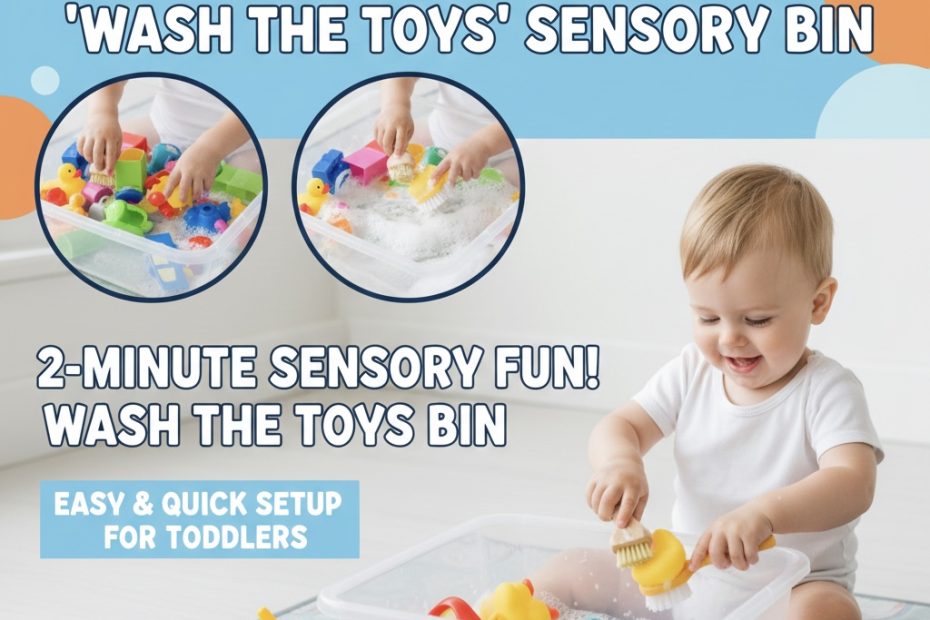
Every parent knows that moment when you need to keep your toddler busy right now. Maybe you’re trying to make dinner, finish a work call, or just need five minutes of peace. A “wash the toys” sensory bin is the perfect solution that takes almost no time to set up but keeps kids happily engaged for surprisingly long.
This simple activity combines water play, pretend play, and sensory exploration all in one. Kids love playing in water, and when you add bubbles and toys that need “cleaning,” it becomes an irresistible invitation to play. Best of all, you can literally set this up in two minutes with things you already have at home.
Let’s walk through exactly how to create this magic activity that parents everywhere swear by for keeping little ones entertained.
What Is a “Wash the Toys” Sensory Bin?
A sensory bin is simply a container filled with materials that children can touch, pour, scoop, and explore. The “wash the toys” version adds soapy water and toys that need cleaning, turning it into an engaging pretend play activity.
Children get to scrub, rinse, and “wash” their toys just like they see grown-ups washing dishes or cars. It feels like a real job, which makes kids feel important and capable. Plus, the sensory experience of warm soapy water is calming and focusing for most children.
This activity works beautifully for toddlers aged 18 months through preschoolers around age 5. Even kindergarteners enjoy it, especially on hot days when water play feels refreshing.
What You’ll Need (All Household Items)
The beauty of this activity is its simplicity. Here’s what to gather:
The container:
- Large plastic bin, storage tub, or basin
- Large mixing bowl (for smaller spaces)
- Baby bathtub
- Plastic storage container
- Even your kitchen sink works perfectly
The water:
- Warm water (not hot, just comfortable)
- Enough to fill your container about halfway
The soap:
- A squirt of dish soap
- Baby shampoo works too
- Bubble bath makes extra bubbles
The “dirty” toys:
- Plastic toys from around the house
- Bath toys
- Play food and dishes
- Small toy cars and trucks
- Plastic animals
- Baby dolls that can get wet
- Anything washable and waterproof
The washing tools:
- Small sponges (cut kitchen sponges into smaller pieces)
- Washcloths
- Soft toothbrush or nail brush
- Small bowls or cups for rinsing
- Optional: toy scrub brush
For drying:
- Towel spread on the floor or table
- Small towel for the child to use
That’s it. Nothing fancy, nothing expensive. Just everyday items that transform into an engaging activity.
Step-by-Step Setup (Seriously, 2 Minutes)
Minute 1: Set up the space
Choose your location. If the weather is nice, set this up outside on a patio, deck, or lawn. Your child will splash, so outdoors is ideal. If you’re inside, put the bin in the bathtub, on the bathroom floor with towels underneath, or in the kitchen on a waterproof mat.
Place your container in the chosen spot. Put a towel or two on the floor around it to catch splashes and drips. If you’re doing this in the bathtub, you’re already set—the splashes don’t matter at all.
Minute 2: Fill and add
Fill the container about halfway with warm water. Not hot, just comfortably warm like you’d use for washing your hands. Add a good squirt of dish soap or a splash of bubble bath. Swish it around with your hand to create bubbles.
Drop in the “dirty” toys. Choose 5-10 toys that can safely get wet. Plastic is perfect. Avoid anything with batteries, fabric stuffed toys, or electronics.
Add the washing tools—a sponge or washcloth and a small cup or bowl. Done. Call your child over and watch them dive right in.
How to Introduce the Activity
The way you present this activity makes it even more appealing. Don’t just say “here’s some water.” Make it exciting and purposeful.
Try saying: “Oh no! These toys got so dirty playing outside. Can you help me wash them clean?” Kids love feeling helpful and responsible.
Or: “We need to give these cars a bath. They’ve been driving through mud puddles all day!” A simple backstory adds to the imaginative play.
Show your child the soapy water, the toys, and the sponge. Demonstrate washing one toy, scrubbing it gently, and setting it on the towel to dry. Then let them take over.
Most children need zero encouragement. They’ll eagerly start scrubbing and splashing right away.
What Kids Actually Do (And Learn)
You might think washing toys sounds simple, but watch a child engaged in this activity. So much learning happens naturally.
They develop fine motor skills. Squeezing sponges, scrubbing surfaces, and picking up slippery toys strengthens hand muscles needed for writing and other tasks.
They practice hand-eye coordination. Pouring water from cup to cup, aiming the stream, and scrubbing specific spots all require coordination.
They engage in pretend play. Kids create elaborate scenarios. The toys might be taking a bath, going to the car wash, or getting ready for a party. This imaginative play builds creativity and language skills.
They experience sensory input. The feeling of warm water, slippery soap, and squishy sponges provides sensory stimulation. This can be especially calming for children who benefit from sensory activities.
They practice life skills. Washing toys is practice for real-life cleaning. Kids learn that objects need care and cleaning, building responsibility.
They stay focused. Water play naturally holds children’s attention. Many kids will play contentedly for 20-30 minutes or even longer with this simple setup.
Age-Specific Tips
For younger toddlers (18 months – 2 years):
Keep the water shallow, just a couple of inches. Use larger toys they can’t swallow. Supervise closely since toddlers might try to drink the soapy water. Skip small scrub brushes and stick with soft sponges. Keep the activity shorter, around 10-15 minutes.
For older toddlers (2-3 years):
Add more water and more toys. Introduce simple cups for pouring and rinsing. You can add a second small bin with clean water for “rinsing” the toys. Give them specific tasks: “Can you wash all the animals first?”
For preschoolers (3-5 years):
Make it more complex. Set up a “rinse station” with clean water next to the soapy water. Add variety to the tools—different sizes of sponges, brushes, cloths. Introduce “drying station” where they dry toys with a towel. Give them more toys to wash. Ask them to sort toys by category as they wash them.
For kindergarteners (5-6 years):
Challenge them with “really dirty” toys (use washable paint or mud). Create a whole car wash or spa scenario. Let them set up the entire activity themselves. Add measuring cups and talk about how much water or soap they’re using.
Simple Variations to Keep It Fresh
Once your child has enjoyed the basic version, small changes make it feel new again.
Baby doll bath time: Fill the bin with baby dolls and give your child a washcloth and gentle soap. They can wash the doll’s hair, clean their face, and dry them off. This builds nurturing skills and pretend play.
Car wash station: Use only toy cars and trucks. Add small brushes and sponges. Kids can pretend they’re running a car wash business. Set up a “drying lane” where clean cars go.
Dish washing station: Use play dishes, cups, and utensils. Add real dish soap and a sponge. Your child can wash and rinse their play food and plates just like grown-ups do. Stack clean dishes on a towel to dry.
Animal spa day: Use plastic animals and soft cloths. Kids can give animals “spa treatments,” washing and grooming them. Add small cups for “shampoo” and “conditioner.”
Beach cleanup: Add sand or dirt to make toys “extra dirty,” then let kids wash them clean. This works best outdoors where mess doesn’t matter.
Color mixing wash: Add a drop of food coloring to the water. Use different colors in different bins. Kids wash toys in colored water and watch colors mix.
Frequently Asked Questions
How long will my child actually play with this?
It varies by age and personality, but most kids stay engaged for 20-40 minutes. Some children play for an hour or more, especially if you occasionally add new toys or challenges.
What if they just want to splash?
Splashing is part of the fun and provides sensory input. Set clear boundaries: “Water stays in the bin.” If you’re worried about mess, do this activity in the bathtub where splashing doesn’t matter.
Can I use this for actual toy cleaning?
Absolutely! This activity genuinely cleans plastic toys. Use regular dish soap and warm water. The toys come out actually clean. It’s productive play that helps you out too.
My child drinks the soapy water. What should I do?
Use very little soap so it’s not concentrated. Choose baby shampoo or gentle dish soap. A tiny taste won’t hurt them, but discourage drinking by redirecting: “The water is for washing, not drinking.” Keep a cup of regular water nearby so they can drink when thirsty.
How do I prevent a huge mess?
Use less water than you think you need. A couple of inches is plenty. Set up in areas where water mess doesn’t matter—the bathtub is perfect. Use towels generously around the play area. Set clear rules: “Gentle splashing only” or “Water stays in the bin.”
What about winter? Can we do this indoors?
Yes! Set up in your bathtub, large shower, or kitchen sink. You can even do it at the table if you use a shallow bin and less water with towels underneath. The kitchen floor works well if you have tile or waterproof flooring.
Safety Reminders
Water play is wonderful but requires supervision. Here are important safety points:
Always supervise. Never leave a young child alone with water, even shallow water. Stay close and engaged.
Watch the temperature. Use warm water, not hot. Test it with your wrist like you would for a baby’s bath.
Non-slip surfaces. Put a bath mat or towel down if you’re on tile or other slippery surfaces. Wet floors can be dangerous.
Choose safe toys. Only use waterproof toys without batteries or electronics. Check that toys don’t have small parts that could come off.
Empty promptly. Don’t leave bins of water standing when you’re done. Empty them right away to prevent drowning hazards.
Gentle soap only. Use mild dish soap or baby products. Avoid anything with harsh chemicals.
Cleanup (Almost as Quick as Setup)
When your child finishes playing, cleanup takes just minutes.
Help them take the toys out and set them on a towel to dry. If the toys are actually dirty, rinse them with clean water. Dump the soapy water down a drain or outside on plants (dish soap won’t hurt them).
Wipe out the bin and let it dry. Gather the towels for the wash. The toys can air dry on the towel, or toss them in a mesh bag and hang them up.
The whole cleanup process takes 5 minutes, and your child can help with most of it. They can pick up toys, help pour out water, and carry towels to the laundry.
Why This Activity Is a Parent Favorite
Parents love “wash the toys” sensory bins for good reasons beyond keeping kids busy.
It’s genuinely calming. Water play has a naturally soothing effect on most children. If your child is wound up or overwhelmed, this activity can help them settle.
It’s independent play. Once you set it up, most kids need minimal help or entertainment from you. They direct their own play and exploration.
It’s actually useful. Unlike some activities that just make messes, this one cleans toys. It’s play with a productive result.
It’s adaptable. You can make it as simple or elaborate as you want. Two toys and a bowl work just as well as an elaborate setup.
It requires no prep. You don’t need to go shopping or print anything. Everything you need is already in your home.
It works year-round. Hot summer day? Perfect outdoor activity. Cold winter day? Bring it inside to the bathtub. It’s always appropriate.
Making It Part of Your Routine
Many families make “toy washing” a regular activity. Some do it weekly as an actual toy-cleaning routine. Others bring it out on rainy days or when they need independent play time for a work call.
You can keep a simple sensory bin kit ready to go. Store a plastic bin with a sponge and small cup inside it. When you need the activity, just add water, soap, and toys. Having it pre-assembled makes setup even faster.
Some parents designate certain toys as “washing toys” that live in a bag specifically for this activity. Old bath toys that aren’t used anymore get a second life as washing toys.
Final Thoughts
The “wash the toys” sensory bin proves that the best activities are often the simplest. You don’t need expensive toys, elaborate setups, or complicated instructions. Just water, soap, toys, and a container create an activity that children find endlessly engaging.
In two minutes, you can set up an activity that entertains your child for 30 minutes or more while also building important developmental skills. They’re learning, playing, and giving you a moment to breathe—all at the same time.
This activity works because it taps into what young children naturally love: water, bubbles, and feeling like they’re doing important grown-up work. It honors their desire to help while giving them sensory input and creative play opportunities.
Next time you need a quick activity that actually works, grab a bin, run some water, squirt in soap, and toss in some toys. Then watch your child happily scrub away while you get a few minutes to yourself. Sometimes the simplest solutions really are the best.
Now if you’ll excuse me, those toy cars are looking pretty dirty. I think they need a wash.